It's Not Loneliness
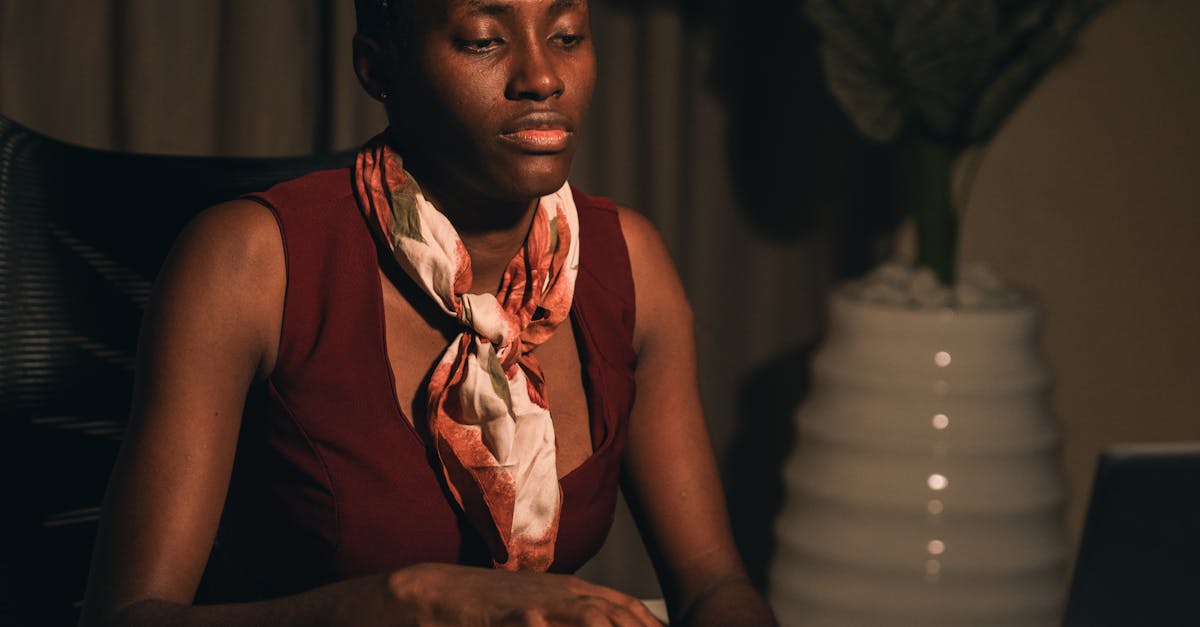
Three a.m. on a Wednesday. HITEC City is quiet outside, finally. She's sitting in her home office, the blue light of her laptop the only thing on. Reports are done. Emails are cleared. The work is, technically, complete.
And she's just sitting there.
It's not loneliness. Loneliness is a simpler feeling — a clear signal that you want company. This is different. It's more like an absence of pressure. A silence that doesn't need to be filled with explanation. No performance required.
The women I'm talking about here — single mothers who run companies, doctors who own practices, executives who manage teams before managing breakfast — they have people in their lives. Friends. Family. Colleagues.
But they don't have room for another person to manage. Someone else's expectations to meet. That's the part nobody says out loud.
If any of this feels familiar, this might be worth a look. No commitment. Just clarity.
The Headache of Modern Dating
Think about dating apps for a second. Or being set up.
It feels exhausting because it is — a headache, honestly. You get home at 9:30pm. You've just spent twelve hours making decisions, solving problems, being "on."
And then you're supposed to swipe? Or text a stranger? Or go on a date where you explain your life story for the eleventh time? Where you justify your schedule? Where you perform a version of yourself that's likable, dateable, easy?
It's not that you don't want connection. It's that you don't have the energy for process.
Most of the time, anyway.
The conventional path to "physical needs" — dating, relationships, marriage — needs a specific currency: time. And emotional bandwidth. And patience for uncertainty.
These women have none of those things left at the end of the day. Their currency is different. It's clarity. It's directness. It's a connection that fits into the cracks of their life, not one that demands they tear the whole structure down to build something new.
What "Physical Needs" Actually Means Now
Here's where things get interesting. And I could be wrong, but —
When a successful single mother in Banjara Hills says she has "physical needs," she's rarely talking about just one thing.
She's talking about touch, sure. But it's touch without a thousand silent questions attached. It's presence without performance. It's the feeling of another human being in the room who isn't there to extract something from you — not your time, not your emotional labor, not your future plans.
It's about reclaiming a part of yourself that got buried under responsibility.
Consider Anjali — 38, runs a boutique design firm in Jubilee Hills, sole guardian to a seven-year-old. Her last relationship ended two years ago. Amicably, even. He was a good man. He just couldn't understand why she couldn't drop everything for a weekend trip. Why her son's school schedule was a non-negotiable grid on her calendar.
What she missed wasn't him, specifically. It was the simplicity. The uncomplicated presence of another adult who wasn't her co-parent, her employee, or her parent.
She needed someone who showed up. And then left. And that was okay.
That's the redefinition happening right now. It's moving from "relationship escalator" to "lifestyle compatibility." From "Where is this going?" to "Does this work for me right now?"
The Two Worlds You're Balancing (And Why One Always Loses)
This isn't just a feeling. It's a structural problem.
A single mother who's also a business owner lives in two parallel worlds, and they have completely opposite rules.
| Your Professional World | Your Personal / Dating World |
|---|---|
| Efficiency is rewarded. | "Taking it slow" is the norm. |
| Clarity of expectations is mandatory. | Unspoken expectations create drama. |
| Your time is your most valuable asset. | Your time is expected to be shared freely. |
| You are in control. | You are supposed to "be vulnerable." |
| Outcomes are measured and clear. | Emotions are ambiguous and shifting. |
You can't switch between these mindsets five times a day. So you pick one. And nine times out of ten, you pick the world that pays the bills and feeds your child.
The personal world gets the leftovers. Which are few. And cold.
This constant friction is why so many women just… opt out. They decide their emotional needs are a luxury they can't afford. Which is exactly why platforms that prioritize discretion and clear compatibility are seeing more interest. They remove the friction of that world-switching.
The Quiet Shift in Hyderabad
I've heard this from women in Gachibowli and Banjara Hills both.
The shift isn't advertised. There's no LinkedIn post about it. It happens in quiet conversations between trusted friends. A recommendation passed along like a secret. A knowing look that says, "I get it. You don't have to explain."
It's moving away from the public performance of dating — the Instagram posts, the family introductions, the "what are we?" talks — toward something more private. More contained. More on their own terms.
Probably the biggest reason is privacy. A high-profile doctor, a startup CEO, a woman with a public-facing role… their personal life is currency. Gossip fodder. Something to be dissected.
Choosing a private relationship model isn't about shame. It's about sovereignty. It's about keeping one part of your life just for you.
It also means that the connection can be exactly what it is, without the pressure to become something else to satisfy external narratives.
Expert Insight
I was reading something last month — a piece on attachment in adults with high-demand careers — and one line stuck with me. The researcher said something like: for individuals who are constantly "on," the deepest form of intimacy isn't more interaction. It's permission to stop interacting.
To be with someone without the pressure to talk, to perform, to entertain.
That's it. That's the core of it.
When your job is a non-stop negotiation of needs and expectations, your personal life can't be another one. It has to be the opposite. A place where needs are simple, expectations are clear, and the only person you need to be is the tired version of yourself at the end of the day.
I don't have a cleaner way to put it than that.
What Are You Actually Looking For?
So if you're reading this and something resonates, pause for a second.
Ask yourself: what am I actually missing?
Is it the idea of a traditional relationship? Or is it the specific sensations within one?
Companionship without complication. Touch without transaction. Presence without a project plan attached.
For a lot of the women I speak to, it's the latter. They don't want to build a shared life from scratch. They've already built one. They want someone to visit it. Briefly. Warmly. On a schedule that works for both of them.
That's a valid need. It's a real one. And acknowledging it is the first step toward meeting it in a way that doesn't drain you further.
Which is why understanding the spectrum of emotional companionship matters. It's not one thing.
Frequently Asked Questions
Is this just about avoiding commitment?
No. It's about redefining what commitment looks like. For a single mother or business owner, committing to a 2-hour dinner once a week is a huge investment of her most scarce resource: focused, undivided attention. It's about quality of presence, not quantity of time.
Does this mean giving up on a "real" relationship later?
Not at all. Think of it as meeting a current, specific need with clarity. This approach often creates more emotional space to even consider a "real" relationship later, because you're not operating from a place of lack or frustration.
How do you ensure privacy and discretion?
By choosing structures and platforms built with that as a first principle, not an afterthought. Clear agreements, limited digital footprints, and mutual respect for each other's public lives are the foundation. It means both people are on the same page from day one.
Isn't this emotionally risky?
All human connection carries risk. The question is: what's the bigger risk? The managed, clear-boundary approach described here? Or the endless, draining cycle of conventional dating that leaves you too exhausted to connect with anyone, including yourself? It's about choosing your challenge.
Can this work for single mothers with young children?
In my experience, it often works better. Schedules are predictable. Availability is limited and known upfront. There's no room for ambiguity, which forces a honesty and efficiency that casual dating often lacks. It turns a constraint into a clarity.
Look — It's Okay To Want Things Simplified
Here's the takeaway.
The women redefining this aren't being cynical. They're being practical. They have too much to lose — their peace, their time, their hard-won stability — to play games with unclear rules.
They've taken a need — the human need for touch, for closeness, for adult company — and asked: how can this fit into my actual life, as it exists today? Not the life I wish I had. Not the life society says I should want.
The life I have. The one with the school runs and the investor meetings and the quiet house at midnight.
The answer looks different for everyone. But it starts with the same question. And honestly, I've seen women choose this path and find a sense of relief they didn't know was possible.
I don't think there's one answer here. Probably there isn't. But if you've read this far, you already know what you're looking for — you're just figuring out if it's okay to want it.
It is.
Curious what this actually looks like in practice? Take a look — no commitment, no noise.