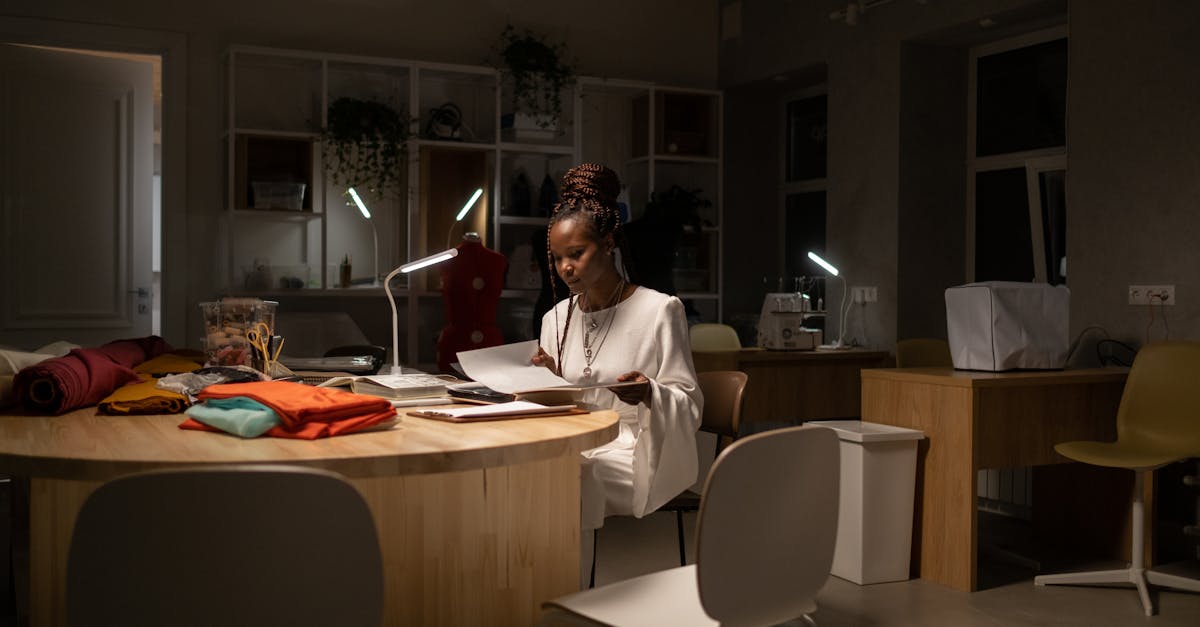
The Night Shift of the Heart
It's 1:14 AM. The Financial District is dark, just the glow of a few late-night office windows. Your husband is asleep. The kids are asleep. The house is quiet in that heavy, final way. And you're scrolling.
Scrolling through nothing. Through photos of people you don't know, news you don't care about, reels of someone else's perfect life. Your thumb moves, but your mind is somewhere else. Somewhere lonely. It's not about being unhappy with your family. It's not about wanting out. It's about a specific, quiet hunger that nobody in your daytime life would understand. Probably the biggest reason this feeling is so brutal is that it feels like a betrayal to even have it. You have everything you're supposed to want. So why does success sometimes feel this quiet?
You want to talk about it. But who do you tell? Your girlfriends would offer solutions you've already tried. Your family would worry. Your partner might feel accused. So you sit with it. You swallow it. You scroll until your eyes burn.
If this resonates, this is worth understanding. It's not a flaw. It's a signal.
What That Midnight Scroll is Actually Saying
Let's be clear: this isn't boredom. It's disconnection. A specific kind. The kind that happens when every role you play — executive, wife, mother, daughter — requires a version of you, but none of them feel like the whole you. The you that exists in the space between those roles, at midnight, is left utterly alone.
Think about your day. From 7 AM to 11 PM, you're in service to something or someone. Meetings, deadlines, school runs, dinner prep, bedtime stories. Your emotional bandwidth is allocated. There's no room for your own unnamed wants. The scroll at midnight? That's the only time your brain has to whisper, 'Hey. What about me?'
I've talked to women in Gachibowli and Jubilee Hills who describe this exact feeling. One called it 'emotional claustrophobia.' You're surrounded by love and responsibility, but you feel strangely, painfully isolated within it. It makes it pretty clear that the problem isn't a lack of people. It's a lack of a specific kind of space — a space just for you, where you don't have to perform.
This is a huge part of the emotional wellness puzzle for high-achieving women. It's not about fixing your life. It's about acknowledging a gap in it.
Why 'Just Talk to Your Partner' Often Doesn't Work
Here's what most advice gets wrong. It assumes your primary relationship can — and should — meet every single emotional need. That's a beautiful idea. It's also a fantasy, and a pressure cooker.
Consider Ananya. She's 38, a finance director. Her husband is a good man. He loves her. But when she tries to explain this vague, midnight ache, he hears: 'You're not enough for me.' He gets defensive. She feels guilty. The conversation shuts down. Now, on top of the loneliness, she has guilt and a sense of having broken something.
His love isn't the issue. The issue is context. He's inside the life you're both building. Sometimes, you need a voice from outside that life. Someone who isn't invested in its maintenance, who can just listen to the 'you' that exists separate from it. That takes the edge off the immense pressure to make your marriage the sole source of your entire emotional world.
It's about privacy — well, partly. But it's also about creating a separate emotional territory. A place where your thoughts aren't immediately worried about their impact on someone else's heart.
The Spectrum of Private Support: What Does 'Help' Actually Look Like?
Okay, so you recognize the need. The next question is paralyzing: what do you DO about it? The options aren't clear. Telling a friend feels risky. Therapy is a formal commitment. A life coach feels too… transactional.
What most women I speak to are looking for exists somewhere in between. It's not clinical therapy (though that's vital for some). It's not just venting to a friend. It's a structured yet personal connection built on three things:
- Absolute Discretion: This isn't gossip fodder. It dies in the room.
- Zero Judgment: You can say the 'ugly' thought — the one about sometimes resenting the very life you worked so hard for — without someone panicking.
- Emotional Neutrality: They're not trying to fix your marriage or get you to quit your job. They're there to witness you, wholly.
This kind of support gives you a mirror that isn't distorted by other people's fears or agendas. You get to see yourself, maybe for the first time in years, without a label attached. Which is… a lot to sit with.
| Traditional Venting (Friend/Therapist) | Modern Private Support |
|---|---|
| Often leads to advice or 'fixing' | Focuses on listening and reflection |
| Connected to your social circle | Completely separate from your life |
| You might self-censor to protect feelings | Designed for full, unfiltered expression |
| Conversation can loop without progress | Structured to move your inner world forward |
| Emotional fallout is possible | Boundaries are the foundation |
Earlier I said therapy isn't the only answer. That's true. But for this specific, midnight loneliness? Sometimes you don't need a diagnosis. You need a specific kind of emotional companionship. Someone who gets the weight of your world without being buried under it themselves.
Expert Insight
I was reading something last month — a research summary on attachment in high-stress environments. One line stuck with me. The psychologist wrote that for high-capacity individuals, the ability to compartmentalize support is not a failure of intimacy, but a sophistication of it. It means that you understand that different relationships serve different purposes. Trying to force one relationship to be everything often drains it of what made it special in the first place. I don't have a cleaner way to put it than that. It's not about division. It's about preservation.
Taking the First Step (Without Anyone Noticing)
The hardest part isn't wanting this. It's giving yourself permission to seek it. The voice in your head says: 'You should be grateful.' 'This is selfish.' 'What will people think?'
Let's reframe that. You are the CEO of your life, your household, your career. What CEO runs every department alone? None. They have advisors, consultants, sounding boards — people they trust for specific insights. Viewing your emotional world with the same strategic respect isn't selfish. It's smart. It's sustainable.
So, what does a first step look like? It doesn't have to be a dramatic declaration.
- Name it for yourself. Write it down. 'I feel disconnected at night and have no outlet.' Just seeing it makes it real.
- Research quietly. Look for platforms or services built with discretion as a core feature, not an afterthought. Read how they talk about privacy.
- Have a low-stakes conversation. Many services offer an introductory chat. No commitment. Just see what it feels like to speak into a space designed to hold your words safely.
She's 41. She runs a team of 30. She hasn't taken a full Sunday off in eight months. Her phone has 47 unread messages. She made herself a coffee at 9pm and stood in her kitchen for a while.
That's the moment before the choice. The moment where you decide to keep swallowing it, or to finally build a door out of that silent room.
Frequently Asked Questions
Is seeking private support outside my marriage a sign it's failing?
No. Not at all. Think of it like this: you have friends for camaraderie, a doctor for health, a mentor for career advice. Your marriage is for shared love and partnership. Private emotional support is for your individual, inner world. Diversifying your support system often takes pressure OFF your marriage, allowing it to breathe and focus on what it does best.
How do I ensure complete privacy?
Look for services that are built from the ground up for discretion. This means encrypted communication, no public profiles, and agreements that conversations are confidential. Any legitimate service will make their privacy protocols clear from the start. Your anonymity isn't a bonus feature; it's the foundation.
What's the difference between this and therapy?
Therapy is clinical, often focused on diagnosing and treating mental health conditions. Private emotional support is more akin to a dedicated, insightful confidant. It's for processing the day-to-day weight of a high-pressure life, navigating complex feelings, and having a judgment-free space to just be yourself. They can complement each other but serve different primary functions.
Won't this make me dependent on someone else?
The goal is the opposite. It's about building your own internal resilience. A good supporter doesn't create dependency; they give you the tools and the reflective space to understand your own thoughts better, so you become more self-sufficient in managing your emotional world. It's empowerment, not enclosure.
How do I know if I really need this?
If you're asking the question, you're already feeling a need. The specific signs: feeling lonely in a crowd, replaying conversations in your head with no resolution, avoiding certain topics with loved ones to 'keep the peace,' or that late-night scroll searching for something you can't name. Your intuition is your best guide here.
From Scrolling to Speaking
The disconnection you feel at midnight is real. It's not a moral failing. It's a human response to a life that asks everything of you and gives back very little space for the person underneath the roles.
Finding private support isn't about finding a secret. It's about building a sanctuary. A small, quiet room of your own in the digital world, where you can put down the weight you carry and just be. Where the scroll stops, and the conversation — the real, messy, unfiltered one — can finally begin.
The question isn't whether you deserve this space. You do. The question is whether you're ready to stop whispering to your phone in the dark and start speaking to someone who actually listens.
Ready to see what that kind of space feels like? Explore what private, meaningful support looks like here — no pressure, just clarity.